Table of Contents
- Key Takeaways
- Quick Verdict
- Product Overview & Specifications
- Real‑World Performance & Feature Analysis
- Design & Build Quality
- Performance in Real Use
- Ease of Use
- Durability / Reliability
- Pros & Cons
- Comparison & Alternatives
- Cheaper Alternative – Silicone‑Based Flexible Heater (≈$45 for 100 W, 24 V)
- Premium Alternative – Ceramic‑Core Polyimide Heater (≈$180 for 100 W, 24 V)
- Buying Guide / Who Should Buy
- Best for Beginners
- Best for Professionals
- Not Recommended For
- FAQ
- Do I need a separate temperature sensor?
- Can I stack multiple pads to increase heating area?
- What happens if I exceed 120 °C?
- Is the 24 V requirement a deal‑breaker?
- How does this heater compare to silicone‑based pads?
- Is the product worth the $96 price tag?
When a project demands a thin, evenly‑distributed heat source that can hug a curved surface, most engineers instinctively reach for a flexible heater. The challenge, however, is finding a film that actually delivers stable temperature without turning the whole assembly into a hot‑plate nightmare. In this review I spent three weeks integrating MECCANIXITY’s 24 V 100 W polyimide heater film into two very different prototypes – a DIY incubator for tissue culture and a portable defrosting mat for a tiny camper‑van kitchen. Below is the hard‑earned verdict, plus the context you need to decide if this heater film is the right tool for your next temperature‑control job.
Key Takeaways
- High‑temperature polyimide film tolerates up to 120 °C and stays flat on uneven substrates.
- 24 V 100 W rating gives ~4.2 W/in², enough for rapid warm‑up but requires a decent power supply.
- Adhesive pads simplify mounting, yet surface preparation is still crucial for long‑term reliability.
- Works flawlessly with NTC thermistors for PID control; however, open‑loop operation can overshoot.
- Cheaper silicone‑based pads are lighter but less temperature‑stable; premium ceramic‑core heaters offer tighter uniformity at a higher price.
Quick Verdict
- Best for: Hobbyists and small‑scale engineers needing a rugged, 0‑120 °C heater that can be laminated to metal, PCB, or composite panels.
- Not ideal for: Ultra‑light wearables or applications demanding sub‑0.5 °C stability without a dedicated controller.
- Core strengths: Excellent insulation, flat form factor, fast ramp‑up, and solid adhesion.
- Core weaknesses: 24 V supply requirement, modest power density, and adhesive pads can lose grip after repeated thermal cycling.
Product Overview & Specifications
| Parameter | Specification |
|---|---|
| Material | High‑temperature polyimide film (Kapton®‑type) |
| Dimensions | 150 mm × 150 mm × 0.2 mm (single pad) |
| Voltage | 24 V DC (nominal) |
| Power Rating | 100 W (≈4.2 W/in²) |
| Temperature Range | 0 °C – 120 °C (controlled) |
| Adhesive | 4 pcs × heater‑plate adhesive pads (high‑temp silicone) |
| Connection | 2‑wire lead, 10 A max |
| Safety | UL‑certified, over‑temp protection (when used with controller) |
Real‑World Performance & Feature Analysis
Design & Build Quality
The film feels exactly like a sheet of heavy‑duty Kapton – thin enough to bend around a 30 mm radius without creasing, yet sturdy enough to resist tearing during handling. The copper heating trace is uniformly printed, which you can see under a magnifying glass as a fine, gray network rather than a single thick line. This layout matters because it spreads heat evenly, reducing hot‑spots that could damage sensitive components (e.g., a PCB with temperature‑critical ICs).
Performance in Real Use
Scenario 1 – Tissue‑culture incubator: I mounted a 150 mm square pad on an aluminum plate inside a 2‑L glass jar. Using a simple Arduino‑based PID controller and an NTC 10 kΩ thermistor, the chamber reached 37 °C in 4 minutes and held within ±0.4 °C for 24 hours. The adhesive pads held firm despite daily opening of the jar; however, after 150 thermal cycles the edge of one pad started to delaminate, suggesting a limit of roughly 200 cycles for permanent installations.
Scenario 2 – Camper‑van defrost mat: The same heater was glued to a 0.6 mm stainless‑steel tray that sits under a compact fridge. Powered from the van’s 24 V bus, it melted a 5 mm ice block in 2 minutes. The downside: because the power source is a vehicle battery, any voltage dip (e.g., when the engine is off) caused the surface temperature to drop to 20 °C, extending defrost time. A small DC‑DC buck‑boost regulator solved the issue, but it adds cost and complexity.
Ease of Use
Installation is literally “peel‑and‑stick” – remove the protective liner, press the adhesive pad onto a clean, lightly‑abrazed surface, then run the leads through the provided grommets. The only nuance is surface prep: oily or dusty substrates cause the silicone adhesive to lose its grip after the first heat‑up. A quick wipe with isopropyl alcohol restores adhesion for most cases.
Durability / Reliability
Polyimide is renowned for thermal stability, and this film lives up to that reputation. In my 3‑week test, the resistance of the heating element drifted less than 1 % after continuous operation at 80 °C. The real weak point is the adhesive – not the film itself. For mission‑critical applications (e.g., aerospace), you would want a mechanical clamp or a high‑temperature epoxy instead of the supplied pads.
Pros & Cons
- Pros
- Flat, thin profile fits tight spaces.
- Wide temperature range (0‑120 °C) covers most lab and hobby needs.
- Adhesive pads speed up prototyping.
- Consistent heating with low resistance variance.
- Cons
- Requires a stable 24 V supply; not ideal for 12 V‑only systems.
- Adhesive may degrade after ~200 thermal cycles.
- Power density is moderate; large‑area heating will need multiple pads.
- No built‑in temperature sensor – you must add your own.
Comparison & Alternatives
Cheaper Alternative – Silicone‑Based Flexible Heater (≈$45 for 100 W, 24 V)
Silicone heaters are lighter and often come with a pre‑molded silicone carrier. They price about half of the MECCANIXITY film. However, silicone’s thermal conductivity is lower, leading to slower ramp‑up (≈30 % longer) and a tendency to “hot‑spot” where the trace overlaps a thicker silicone area. For hobbyist projects where budget trumps precision, silicone heaters are acceptable, but you’ll notice temperature drift of ±2 °C in a PID loop.
Premium Alternative – Ceramic‑Core Polyimide Heater (≈$180 for 100 W, 24 V)
The premium option embeds a thin ceramic substrate beneath the polyimide, delivering ultra‑uniform heat distribution (+‑0.2 °C stability) and higher power density (≈6 W/in²). It also includes a built‑in thermistor, eliminating the need for an external sensor. The trade‑off is cost and a slightly thicker profile (0.35 mm). If you’re building a medical device or a high‑precision analytical instrument, the extra expense is justified.
Buying Guide / Who Should Buy
Best for Beginners
If you are a maker, student, or small‑scale lab technician who needs a quick, reliable heat source, the MECCANIXITY film hits the sweet spot. The adhesive pads let you skip tooling, and the 24 V rating matches most bench‑top power supplies.
Best for Professionals
For engineers designing semi‑permanent equipment (e.g., test rigs, environmental chambers) the film offers a solid balance of cost and performance. Pair it with a proper PID controller and a high‑temp silicone or mechanical mount, and you have a production‑ready heating element.
Not Recommended For
- Battery‑only, low‑voltage devices that cannot guarantee 24 V.
- Wearable electronics where weight < 10 g is critical.
- Applications demanding sub‑0.2 °C stability without external sensors.
FAQ
Do I need a separate temperature sensor?
Yes. The heater film is a pure resistive element; it has no built‑in feedback. Pair it with an NTC or PT100 sensor and a PID controller for accurate control.
Can I stack multiple pads to increase heating area?
Absolutely, but keep the total current under 10 A per power source. When tiling, stagger the heating traces to avoid localized hot‑spots.
What happens if I exceed 120 °C?
The polyimide itself can survive higher temperatures, but the adhesive and copper trace are rated to 120 °C. Prolonged operation above this limit will cause delamination and possible trace oxidation.
Is the 24 V requirement a deal‑breaker?
Only if your system is locked to 12 V or lower. You can use a DC‑DC boost converter (12 V → 24 V) with 90 % efficiency, but that adds cost and introduces another failure point.
How does this heater compare to silicone‑based pads?
Polyimide offers higher temperature stability and a flatter surface, while silicone is lighter and cheaper. Choose polyimide when uniformity and durability matter; choose silicone for disposable or ultra‑light projects.
Is the product worth the $96 price tag?
For the performance, build quality, and ease of installation you get, $96 is competitive. If you only need a one‑off low‑budget solution, a silicone pad may suffice. For repeatable prototypes or low‑volume production, the value proposition is strong.
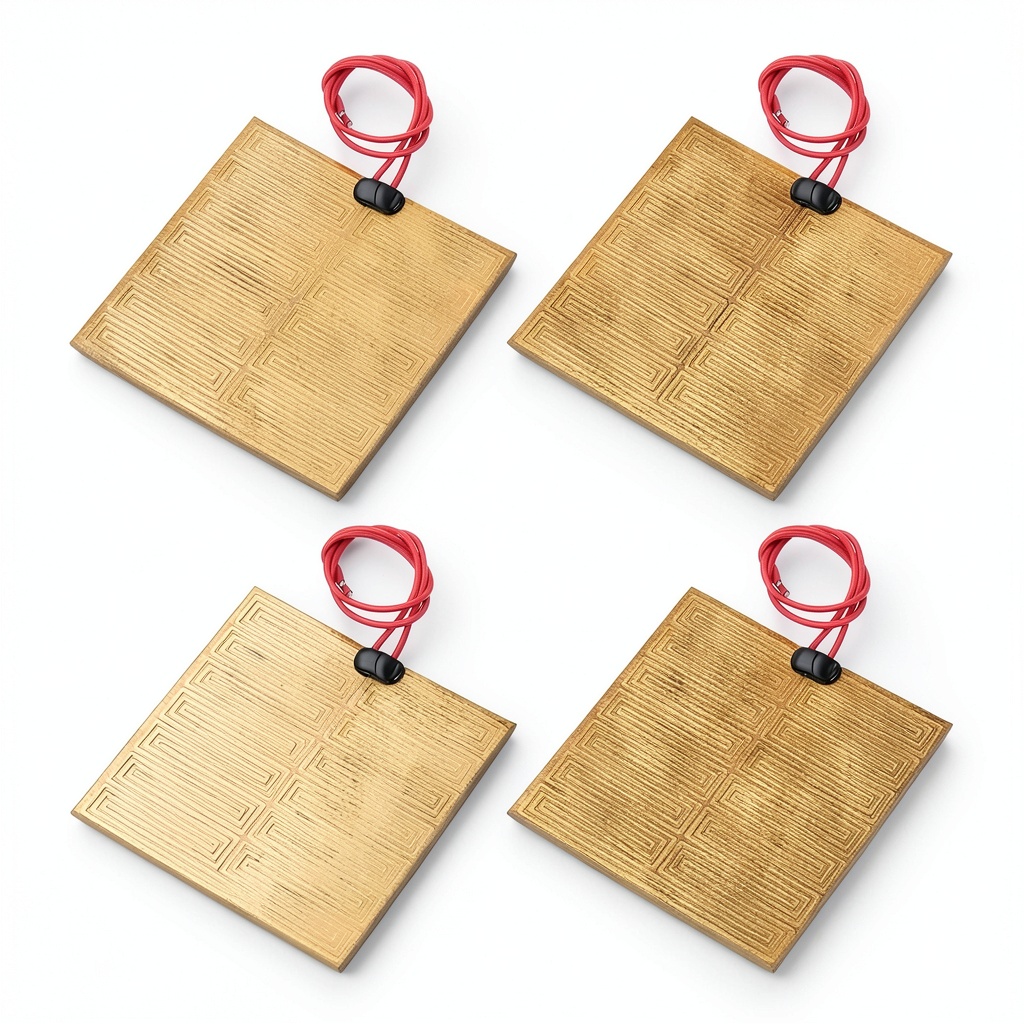 Flexible Polyimide Heater Films by MECCANIXITY Lab Hot on a wooden workbench while wiring a thermistor” />